
Feedstocks are the raw materials used to produce low carbon liquid fuels (LCLFs). They include biomass, waste and residue streams and, for e-fuels, captured carbon dioxide (CO2) and renewable hydrogen (H2). Feedstocks shape the supply and sustainability of low carbon liquid fuels, and strongly affect delivered fuel costs, life cycle emissions performance and production scale .
Explore
Feedstock supply underpins low carbon liquid fuels
Feedstock supply influences fuel costs, sustainability outcomes and the ability to scale low carbon liquid fuels. Australia has the land and the biomass to support a domestic industry.
National strategy
National Bioenergy Feedstock Strategy
Released by the Australian Government in August 2026, it sets a shared national direction for growing feedstock supply from farming and forestry across five priority areas: data, innovation, regional supply chains, sustainability and certification, and sector capability .
Types of feedstocks
Fats & oils
Fat- and oil-rich feedstocks that can be upgraded into hydrocarbons or transesterified into fatty-acid esters.
Canola oilTallow and animal fatsUsed cooking oil (UCO)Cottonseed oilSunflower oilOther oilseeds (carinata, juncea, camelina, safflower)Pongamia oil
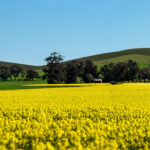 Canola oilOil extracted from crushed canola seed.Sustainable aviation fuel (SAF)Renewable dieselBiodiesel
Key considerations
- Most of Australia’s canola crop is exported and converted to fuel overseas. See the Agriculture page for volumes.
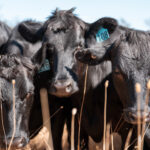 Tallow and animal fatsRendered fats from livestock processing.Sustainable aviation fuel (SAF)Renewable dieselBiodiesel
Key considerations
- Tallow has established markets in oleochemicals, pet food, stockfeed and aquaculture feed, and most Australian production is exported.
 Used cooking oil (UCO)Post-consumer cooking oils from restaurants, food processing facilities and households.Sustainable aviation fuel (SAF)Renewable dieselBiodiesel
Key considerations
- A residue stream: the volume available follows how much oil is used in cooking.
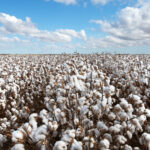 Cottonseed oilOil extracted from cotton seeds, a by-product of cotton grown for fibre.Sustainable aviation fuel (SAF)Renewable dieselBiodiesel
 Sunflower oilOil extracted from crushed sunflower seeds.Sustainable aviation fuel (SAF)Renewable dieselBiodiesel
 Other oilseeds (carinata, juncea, camelina, safflower)Oilseed crops attracting interest as low carbon liquid fuel feedstocks.Sustainable aviation fuel (SAF)Renewable dieselBiodiesel
Key considerations
- Carinata is a certified non-food crop that can be grown in rotation or on fallow ground.
 Pongamia oilOil extracted from the seeds of a tropical legume tree native to Northern Australia and the Indo-Pacific.Sustainable aviation fuel (SAF)Renewable dieselBiodiesel
Key considerations
- A tree crop with a multi-year establishment period, and the oil is not used as food.
Carbohydrates (sugars & starches)
Carbohydrate feedstocks that can be converted to products such as ethanol and then upgraded where required to hydrocarbons or fermented directly into fuels or fuel precursors.
Sugarcane molasses/sugarsGrain starch (wheat, barley)Sorghum grain
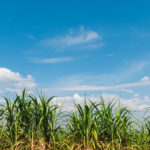 Sugarcane molasses/sugarsMolasses and sugar streams from sugarcane processing.BioethanolIsobutanolSustainable aviation fuel (SAF)
Key considerations
- Molasses already has markets as stockfeed, and one Australian mill uses it to produce ethanol.
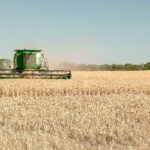 Grain starch (wheat, barley)Starch extracted from cereal grains.BioethanolIsobutanolSustainable aviation fuel (SAF)
Key considerations
- Grain is used for food and stockfeed, and Australia is a major grain exporter.
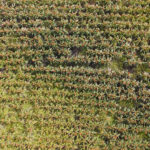 Sorghum grainDrought-tolerant cereal grain with fermentable sugars and starch.BioethanolIsobutanolSustainable aviation fuel (SAF)
Lignocellulosic biomass
Plant-based biomass mainly composed of cellulose, hemicellulose and lignin, including agricultural residues and forestry/wood-processing residues.
Sugarcane bagasse, tops and trashCereal straw (wheat, barley, oats)Forestry residuesSawmill residuesCotton gin trash
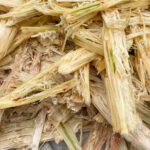 Sugarcane bagasse, tops and trashFibrous residues from sugarcane harvesting and milling.Sustainable aviation fuel (SAF)Renewable dieselBioethanolRenewable methanolRenewable ammonia
Key considerations
- Bagasse is burnt at the mills to raise steam and generate electricity.
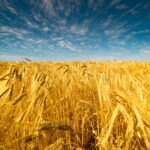 Cereal straw (wheat, barley, oats)Agricultural residues from cereal grain harvesting.Sustainable aviation fuel (SAF)Renewable dieselBioethanolRenewable methanolRenewable ammonia
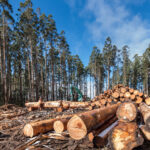 Forestry residuesWoody residues from plantation and native forest harvesting operations.Sustainable aviation fuel (SAF)Renewable dieselBioethanolRenewable methanolRenewable ammonia
Key considerations
- Australia’s plantation resource is concentrated in Tasmania, Western Australia and the Green Triangle, so residue supply clusters around those regions.
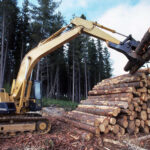 Sawmill residuesSawdust, chips and bark from timber processing.Sustainable aviation fuel (SAF)Renewable dieselBioethanolRenewable methanolRenewable ammonia
Key considerations
- Aggregated at the mill rather than dispersed across harvest sites, and sold into bioenergy and wood panel markets.
 Cotton gin trashFibrous residues from cotton ginning (leaves, sticks, burrs, lint and soil).Sustainable aviation fuel (SAF)Renewable dieselBioethanolRenewable methanol
Key considerations
- Most Australian gins compost or mulch it and return it to the land.
Dedicated energy crops
Purpose-grown crops cultivated primarily for energy/bioproduct markets including herbaceous grasses and short-rotation woody crops.
Perennial grasses (miscanthus, switchgrass)Short rotation woody crops (mallee)Agave
Perennial grasses (miscanthus, switchgrass)Purpose-grown perennial grasses cultivated for biomass energy production.Sustainable aviation fuel (SAF)Renewable dieselBioethanolRenewable methanol
Short rotation woody crops (mallee)Fast-growing woody species cultivated in short rotation cycles for biomass.Sustainable aviation fuel (SAF)Renewable dieselBioethanolRenewable methanol
Key considerations
- Mallee is planted in belts through the Western Australian Wheatbelt, originally to help manage dryland salinity rather than as an energy crop.
AgaveDrought-tolerant succulent whose stored carbohydrates can be converted to fermentable sugars.BioethanolSustainable aviation fuel (SAF)
Key considerations
- Tolerates low rainfall and can be grown without irrigation. Australian plantings are small.
Aquatic biomass
Biomass produced in freshwater or marine systems, such as microalgae and seaweed, that can be cultivated and harvested for conversion into fuels via biochemical or thermochemical pathways.
MicroalgaeSeaweed/macroalgae
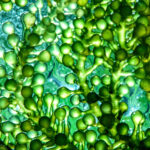 MicroalgaeMicroorganisms that can accumulate high lipid content, cultivated in photobioreactors or open ponds.Sustainable aviation fuel (SAF)Renewable dieselBiodiesel
Key considerations
- Harvesting, dewatering and downstream processing costs remain the main constraint on scaling.
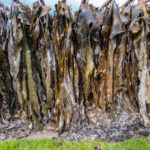 Seaweed/macroalgaeMarine macroalgae cultivated in ocean or land-based systems.Sustainable aviation fuel (SAF)Renewable dieselBioethanolRenewable liquefied natural gas
Key considerations
- Seaweed grows in the sea, so it does not compete for farmland or freshwater and does not change land use .
- It can be converted to fuel by fermentation, hydrothermal liquefaction or anaerobic digestion, but it is harvested wet, so transport to shore and downstream processing add cost. Seaweed-to-fuel production has not yet reached commercial scale .
- Australia has a small, emerging seaweed industry, so far largely based on wild harvest .
Organic wastes & residues
Biogenic waste streams from households, municipalities and industry that can be converted to fuels via biological or thermochemical pathways.
Municipal solid waste (Organic)Sewage sludge and wastewaterLandfill gas
Municipal solid waste (Organic)Organic fraction of household and commercial waste streams. Includes green wastes that are separately collected in some municipalities.Sustainable aviation fuel (SAF)Renewable dieselBioethanolRenewable methanolRenewable ammoniaRenewable liquefied natural gas (LNG)
Key considerations
- How much is available depends on how much organic waste local collection systems separate from general waste.
Sewage sludge and wastewaterSolids and organic matter from municipal wastewater treatment, generated continuously wherever wastewater is treated.Renewable dieselRenewable methanolRenewable liquefied natural gas (LNG)
Landfill gasBiogas from decomposing organic waste in landfills, made up of roughly equal parts methane and carbon dioxide.Renewable liquefied natural gas (LNG)Renewable methanol
Power-to-liquids (PtL) e-fuels
Synthetic liquid fuels made by using renewable electricity to produce hydrogen (electrolysis), then combining it with captured carbon dioxide (CO₂) to create liquid e-fuels.
Captured CO₂ + renewable hydrogen (H₂)
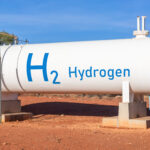 Captured CO₂ + renewable hydrogen (H₂)Synthetic fuels produced from renewable hydrogen and captured CO₂, from biogenic, industrial or direct air capture sources, via synthesis routes that produce drop-in hydrocarbon fuels or alcohol intermediates.Sustainable aviation fuel (SAF)Renewable dieselRenewable methanolRenewable dimethyl ether (DME)Renewable ammonia
Key considerations
- Unlike every other feedstock on this page, the inputs are not grown or collected. Electricity and hydrogen costs are the dominant drivers of fuel cost.
Factors influencing feedstock and resource viability
Key factors that commonly determine whether a feedstock is viable for low carbon liquid fuels include
Quantity and consistency
Volumes, inter-annual variability, and seasonality.
Competing uses and opportunity cost
Existing markets, for example animal feed, industrial uses and on-site energy, that affect availability for fuels.
Supply-chain requirements
Collection, aggregation, handling, storage, and transport needed to deliver reliable supply.
Sustainability constraints and certification
Land-related criteria, emissions-reduction thresholds, traceability, and certification requirements. International frameworks set much of this.
Quality and contamination
Variability in ash and soil, water, plastics, or other contaminants that can increase processing requirements.
Delivered cost drivers
Distance to hubs and ports, bulk density, moisture, and the need for densification or pre-processing.
Regional infrastructure and enabling conditions
Proximity to processing infrastructure, energy and water availability, workforce and logistics capacity, and co-location opportunities.
Conversion pathway compatibility
Match between feedstock characteristics and the maturity, approval status and operating requirements of available conversion technologies.
Keep exploring
Resources
A selection from the library related to this page.